It All Began with an Idea
A simple question sparked our journey: Why shouldn’t every competitive gamer experience maximum frame rates and zero micro-stutters without expensive hardware upgrades?
How a single developer’s vision evolved into a premier PC and laptop optimization ecosystem.
The researchers, system engineers, and advisors who contributed expertise to the RyNxt optimization ecosystem.

Systems architect and computational pathology researcher specializing in low-level OS kernel optimization, high-throughput cloud backends, and real-time biomedical computer vision.
Architect of RyNxt, engineering sub-millisecond Windows timer resolution schedulers, CPU core affinity algorithms, and DirectStorage I/O pipelines. Concurrently pioneering deep learning frameworks for real-time virtual staining and semantic tissue segmentation—combining histopathological wet-lab methodology with generative diffusion models, U-Net, and TensorRT acceleration.

Specialized in Computer Vision (YOLO, SAM, GroundingDINO, U-Net), Generative AI (CLIP, GANs), Transformers (ViT), and Time-Series Forecasting (N-BEATS, TFT, LSTM) with PyTorch and TensorFlow. Leads end-to-end MLOps architectures utilizing MLflow, Airflow, Docker, Kubernetes, and automated CI/CD pipelines.
Architect of scalable web infrastructure, reactive user dashboards, and secure backend microservices.
Department head at Shahab Danesh University, conducting research in artificial intelligence and intelligent decision systems.
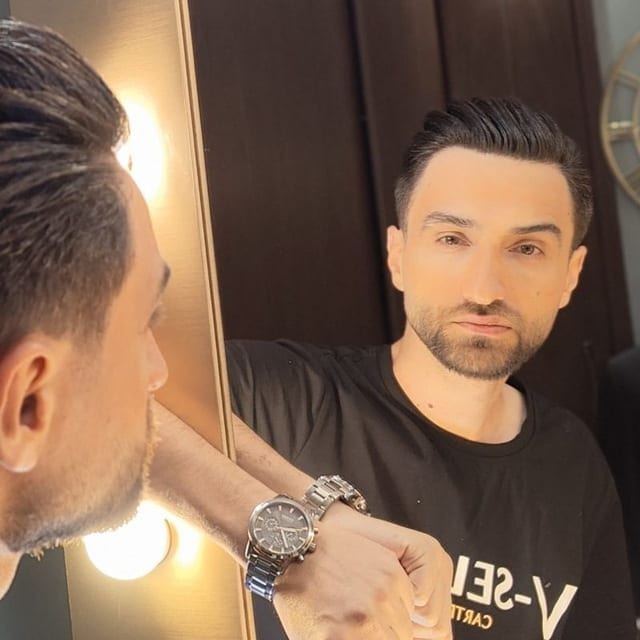
Specialist in digital product management, scaling gaming technology platforms, and competitive gaming infrastructure.
Specialist in low-level Windows security, threat modeling, and application sandbox integrity verification.
Creative producer directing gaming benchmark documentation, educational video assets, and community media outreach.
RyNxt is led by Mohammad Javad Asadi and an interdisciplinary team specializing in Windows NT kernel optimizations, DirectStorage pipelines, high-throughput full-stack architectures, and real-time medical image translation using generative deep learning.